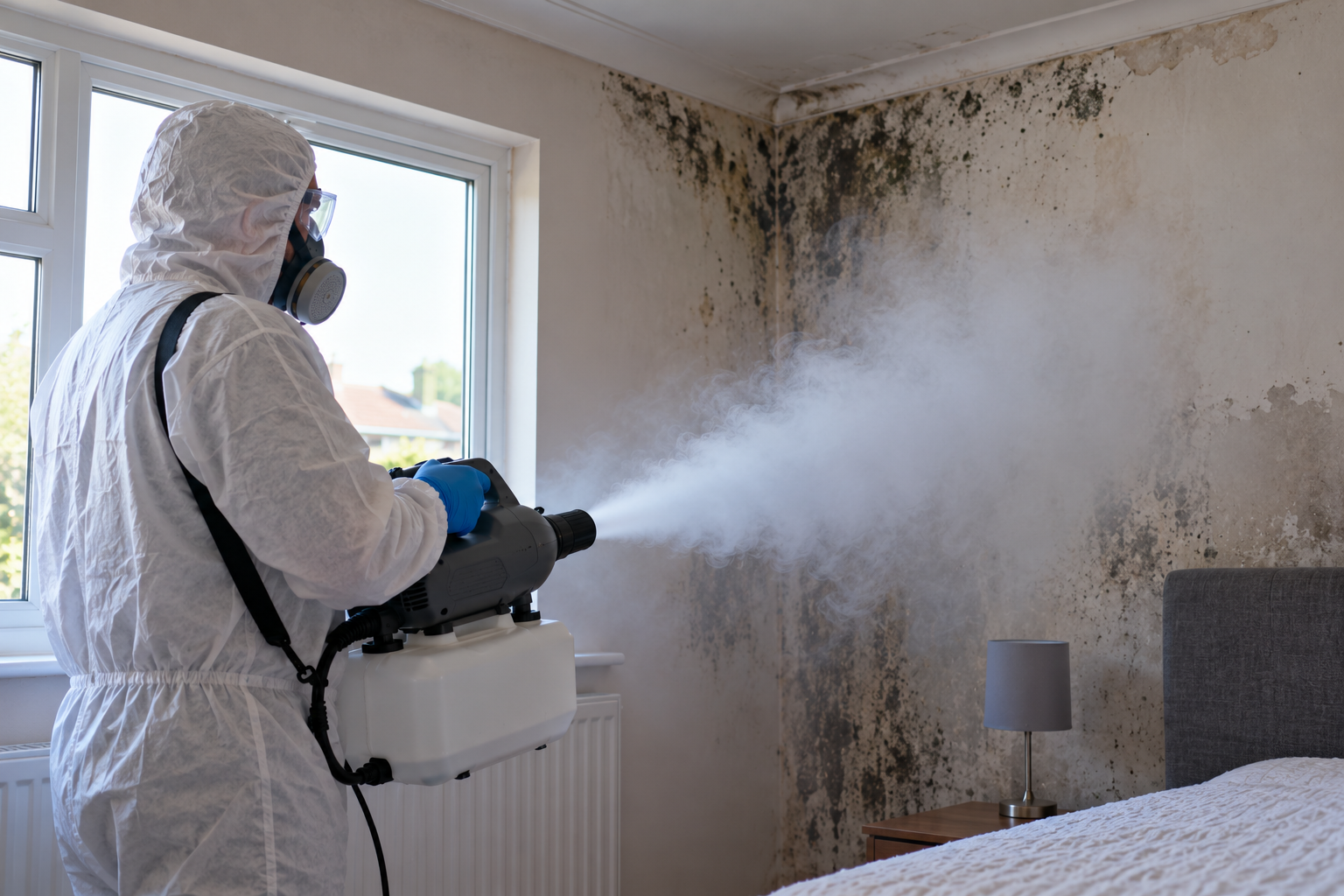
Mould Spores, Fogging & Professional Home Treatment
Mould can be more than an unsightly patch on a wall. When mould is disturbed, tiny particles and spores can become airborne and potentially spread to other areas of a property.
At BioShield360, we use a combination of professional mould removal, high-temperature steam treatment, humidity control and, where appropriate, ULV fogging to help restore affected areas and improve the overall cleanliness of the environment.
What Are Mould Spores?
Mould reproduces by releasing microscopic spores into the air. Spores can be present naturally in indoor and outdoor environments, but problems can occur when moisture allows mould to grow extensively inside a property.
Mould commonly develops around:
- Condensation-prone walls
- Window reveals and frames
- Behind furniture
- Bathrooms and kitchens
- Damp or poorly ventilated rooms
- Areas affected by leaks or water damage
- Wallpaper and wall coverings
- Carpets, soft furnishings and other porous materials
Visible mould should always be treated as a sign that the underlying moisture conditions need to be investigated.
Can Mould Spores Become Airborne?
Yes. Mould spores can become airborne through normal disturbance, airflow and cleaning activities.
Removing heavily contaminated materials, brushing surfaces or disturbing mould growth can increase airborne particles temporarily. This is why appropriate containment, ventilation and personal protective equipment are important during professional remediation work.
How Can Fogging Help?
Professional ULV fogging produces a very fine mist that can disperse a suitable treatment throughout an enclosed area.
Depending on the product being used, fogging may be used as part of a wider sanitation process to treat accessible surfaces and help reduce certain airborne or environmental microorganisms.
At BioShield360, fogging is considered a supporting treatment, rather than a replacement for removing visible mould.
Fogging may be useful after:
- Physical mould removal
- Steam treatment
- Cleaning contaminated surfaces
- Removal of affected materials
- Treatment of areas where airborne contamination is a concern
The property and the level of contamination should be assessed before deciding whether fogging is appropriate.
Fogging Does Not Remove the Cause of Mould
This is one of the most important points.
Fogging alone will not solve a persistent mould problem if the underlying moisture source remains.
For example, if a room has high humidity, condensation, poor ventilation or an unresolved leak, mould can return even after the affected area has been cleaned.
A complete approach should therefore consider:
1. Identify the moisture problem
Determine whether condensation, humidity, leaks, water ingress or another issue is contributing to the mould.
2. Remove visible mould
Affected surfaces should be cleaned using an appropriate remediation method.
3. Treat difficult areas
High-temperature steam can be useful on suitable surfaces and materials where appropriate.
4. Control humidity
Dehumidification and improved ventilation can help create conditions that are less favourable for mould growth.
5. Consider additional sanitation
Where appropriate, professional ULV fogging can form part of the final environmental sanitation process.
Why Professional Mould Treatment Is Different
Mould is not simply a cleaning problem. The correct treatment depends on the extent of growth, affected materials, moisture conditions and the condition of the property.
BioShield360 can assess the affected area and recommend an appropriate combination of:
- Mould removal
- High-temperature dry steam treatment
- Surface cleaning
- Humidity control
- Professional dehumidification
- Air movement
- Moisture monitoring
- ULV fogging where appropriate
This approach focuses on both the visible problem and the environmental conditions that allowed the mould to develop.
What About Mould Behind Wallpaper?
Wallpaper can sometimes conceal mould growth.
If mould is present underneath or behind wallpaper, simply cleaning the visible surface may not be sufficient. In some situations, wallpaper may need to be carefully removed so that the underlying wall can be inspected and treated.
Professional removal can also help reduce unnecessary disturbance of contaminated material.
After Treatment
Once mould has been removed, keeping the environment dry is essential.
Simple measures can include:
- Improving ventilation
- Using extractor fans
- Keeping humidity under control
- Avoiding excessive indoor moisture
- Allowing condensation-prone areas to dry
- Moving furniture away from cold external walls where appropriate
- Monitoring humidity with a suitable meter
For properties with significant moisture problems, professional dehumidification may be recommended.
A Cleaner, Healthier Home
Mould problems are best addressed as a complete environmental issue rather than simply treating what can be seen.
Remove the mould. Address the moisture. Clean the environment. Monitor the conditions.
Where appropriate, professional fogging can be incorporated into a wider mould remediation and sanitation programme.
BioShield360
BioShield360 provides professional mould removal, steam sanitation, humidity control and environmental cleaning services for homes, landlords and property professionals.
If you're dealing with recurring mould, condensation, musty odours or high indoor humidity, an assessment can help identify the most appropriate treatment for your property.
BioShield360 — Cleaner Homes • Healthier Lives