Humidity Control: How to Reduce Condensation and Prevent Mould in Your Home
Excess humidity is one of the most common contributors to condensation, damp conditions and mould growth inside the home.
For homeowners and landlords across Wakefield and West Yorkshire, controlling indoor humidity can be an important part of maintaining a cleaner, drier and more comfortable property.
At BioShield360, we provide professional humidity control, dehumidifier hire, moisture monitoring and mould treatment to help tackle properties affected by excess moisture.
What Is Indoor Humidity?
Humidity is the amount of moisture present in the air.
Some moisture is completely normal. Everyday activities such as:
- Showering
- Cooking
- Drying clothes
- Washing
- Breathing
- Using tumble dryers
all introduce moisture into the indoor environment.
Problems can occur when moisture levels remain too high for prolonged periods.
How Does High Humidity Cause Mould?
When warm, moisture-laden air comes into contact with colder surfaces, condensation can form.
You may notice moisture around:
- Windows
- Window frames
- External walls
- Corners of rooms
- Behind wardrobes
- Around furniture
- Ceilings
- Bathrooms and kitchens
If these areas remain damp, they can provide favourable conditions for mould growth.
This is why simply cleaning visible mould may not be enough. The moisture problem also needs to be addressed.
What Is the Ideal Humidity Level?
For most homes, maintaining indoor relative humidity at approximately 40–60% is a useful general target.
If humidity regularly remains above this range, particularly alongside condensation or visible mould, it may be worth investigating the cause.
A simple digital hygrometer can help you monitor humidity levels around your home.
Signs Your Home May Have Excess Humidity
Look out for:
- Regular condensation on windows
- Persistent musty smells
- Black or green mould spots
- Damp-feeling rooms
- Peeling wallpaper or paint
- Mould around window frames
- Condensation behind furniture
- Carpets remaining damp
- High humidity readings
- Mould repeatedly returning after cleaning
Recurring mould is particularly important because it can indicate that the underlying moisture conditions have not been resolved.
Can a Dehumidifier Help?
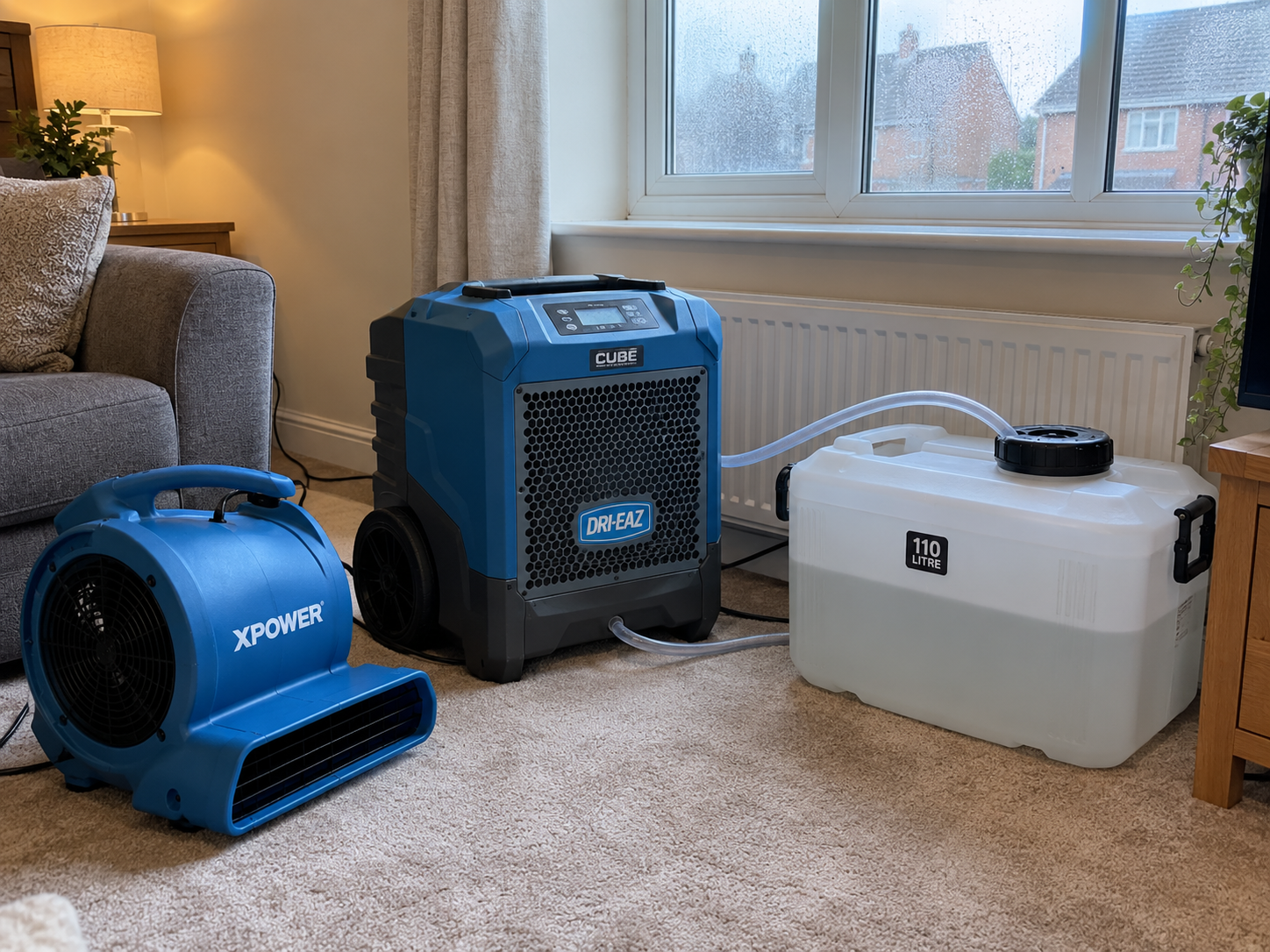
A professional dehumidifier can remove moisture from the air and help reduce excessive humidity.
This can be particularly useful following:
- Water leaks
- Flooding
- Mould treatment
- Carpet cleaning
- Plastering or decorating
- Property refurbishment
- Persistent condensation
- Damp-related problems
However, a dehumidifier should not be viewed as a complete solution to every damp problem.
If there is a structural leak, penetrating damp or another building defect, the underlying cause needs to be addressed.
Professional Humidity Control
BioShield360 can provide professional humidity-control equipment for properties requiring temporary moisture reduction.
Our equipment can be used alongside commercial air movement and moisture monitoring to help dry affected areas and monitor progress.
Where appropriate, we can provide:
- Professional dehumidification
- Commercial air movers
- Moisture measurements
- Humidity monitoring
- Drying support
- Mould removal
- Steam sanitation
- Environmental cleaning
Why Air Movement Matters
Removing moisture from the air is only part of the drying process.
Air movement can help move moisture away from damp surfaces and improve drying efficiency.
For example, a combination of dehumidification + controlled air movement + moisture monitoring can be useful when drying affected areas.
The exact equipment required depends on the property and the extent of the moisture problem.
Humidity Control After Mould Removal
If visible mould has been professionally removed, controlling humidity afterwards can help create a less favourable environment for mould to return.
A typical approach may include:
Inspect → Identify moisture → Remove mould → Dry → Control humidity → Monitor
This is particularly important where mould has repeatedly returned.
Simple Ways to Reduce Humidity at Home
You can help control moisture by:
- Using extractor fans when showering
- Ventilating kitchens during cooking
- Drying clothes outside where possible
- Avoiding excessive moisture indoors
- Keeping rooms adequately heated
- Allowing bathrooms to dry after use
- Keeping furniture slightly away from cold external walls
- Monitoring humidity with a hygrometer
- Dealing with leaks promptly
Humidity Control for Landlords & Property Professionals
Excess humidity and mould can be particularly challenging in:
- Rental properties
- Empty properties
- HMOs
- Student accommodation
- Properties between tenants
- Properties following water damage
BioShield360 can provide humidity control, mould removal and professional cleaning to help landlords and property managers prepare properties for occupation.
Humidity Control Across Wakefield & West Yorkshire
BioShield360 provides professional humidity-control and environmental cleaning services across Wakefield and surrounding West Yorkshire areas, including:
Wakefield • Castleford • Pontefract • Ossett • Horbury • Normanton • Featherstone • Leeds • Dewsbury • Huddersfield • Bradford • Halifax
Whether you're dealing with condensation in a bedroom, recurring mould, damp carpets or excessive humidity following water damage, identifying and controlling moisture is an important part of the solution.
BioShield360
Humidity Control | Mould Removal | Dehumidification | Steam Cleaning | Environmental Cleaning
Cleaner Homes • Healthier Lives