Wall Moisture Readings: How to Check for Damp and Mould in Your Home
Understanding wall moisture, room humidity and condensation | BioShield360
Moisture in walls and excess humidity indoors can contribute to mould growth, musty odours and damage to interior surfaces. However, identifying the cause is just as important as cleaning away the visible mould.
At BioShield360, our professional mould cleaning service includes moisture readings to help assess affected wall surfaces and identify areas that may need further investigation.
Whether you are a homeowner, landlord or letting agent in Wakefield or West Yorkshire, understanding moisture readings can help you make more informed decisions about mould treatment and humidity control.
What Are Wall Moisture Readings?
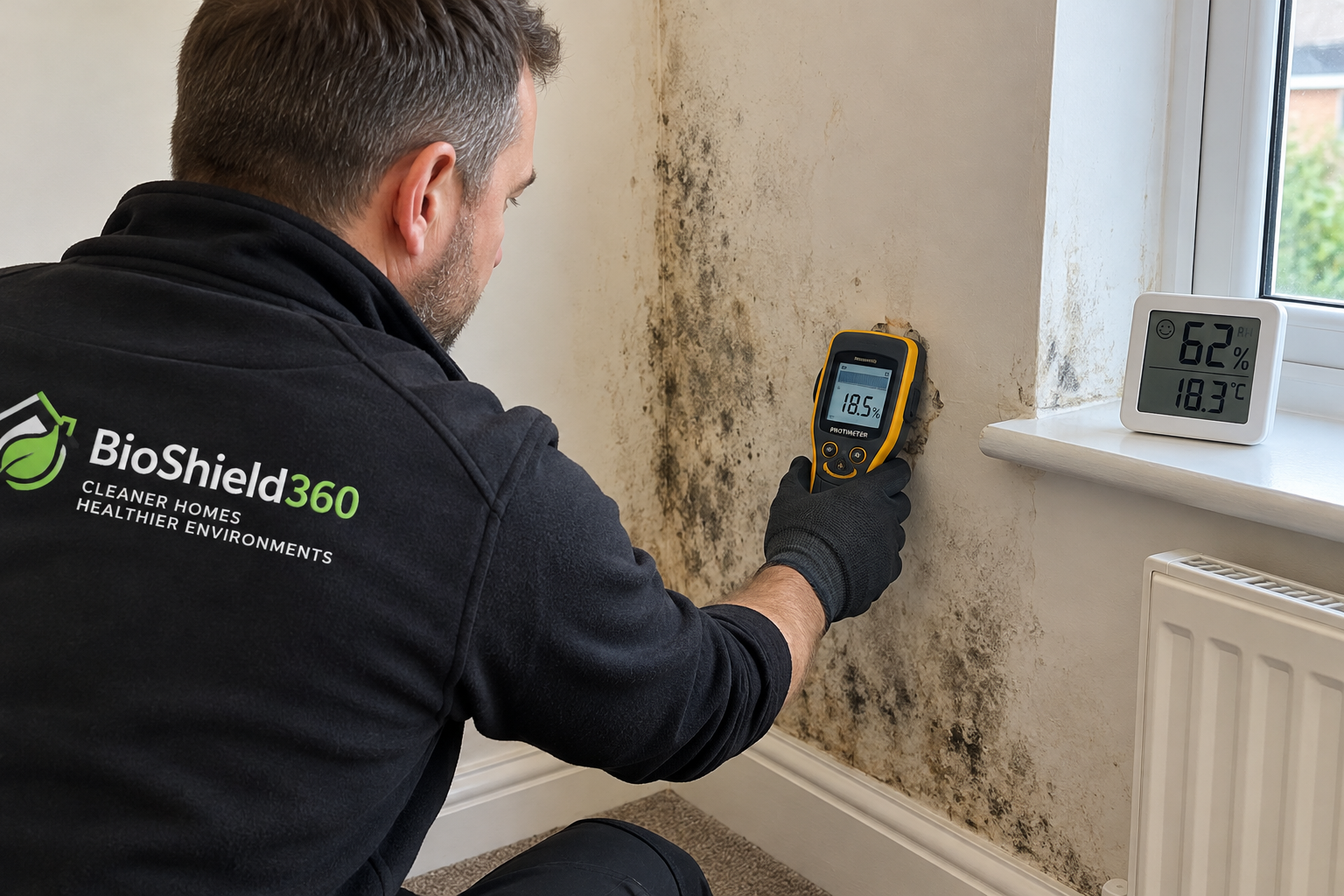
Wall moisture readings are measurements taken using a moisture meter to assess moisture conditions within or at the surface of a building material.
Depending on the instrument, a meter may provide a percentage reading, a relative scale or an indicative moisture value. Some meters are designed for timber, while others can assess masonry and plaster using different measurement methods.
Moisture meters can help identify areas that appear wetter than surrounding surfaces, providing useful information when investigating mould and dampness.
However, a reading alone cannot always confirm the presence of penetrating damp, rising damp or a leak. The material, meter type, salts and other conditions can influence the result.
How We Take Moisture Readings
As part of a professional mould assessment, suitable areas can be checked before and after cleaning where appropriate.
1. Inspect the affected wall
We look for visible mould, staining, peeling paint, damaged plaster and signs of condensation. We also consider the position of the affected area, such as external walls, window reveals and corners.
2. Take wall moisture readings
A suitable moisture meter is used to check selected locations. Readings from affected areas can be compared with readings from nearby areas that appear unaffected.
This comparison can help identify variations that may warrant further investigation.
3. Measure room humidity
Where appropriate, indoor relative humidity is measured using a hygrometer or suitable environmental meter.
Relative humidity describes the amount of water vapour in the air compared with the maximum amount the air can hold at that temperature. It is different from the moisture content of a wall.
4. Record and interpret the findings
Readings are considered alongside the visual inspection, room temperature, ventilation and possible moisture sources.
Where useful, measurements can be recorded to establish a baseline for future comparison. Any limitations of the meter and the readings should be taken into account.
What Do Moisture Readings Mean?
Moisture meter readings must be interpreted according to the type of meter and the material being tested.
A reading that is normal for one material may not mean the same thing for another. There is no single universal moisture percentage that reliably identifies dampness in every plastered or masonry wall.
For this reason, we avoid diagnosing the cause of damp solely from one meter reading.
A pattern of elevated readings, visible deterioration and other evidence may indicate that further investigation is needed.
What Is a Normal Room Humidity Level?
Indoor relative humidity is an important part of understanding the conditions that may encourage condensation and mould.
As a general guide:
- Below 40% RH: Relatively dry indoor air; very low humidity may cause discomfort.
- Around 40–60% RH: A commonly used general target range for indoor humidity.
- Above 60% RH: Humidity is elevated and may increase the risk of condensation in cooler areas.
- Persistently high humidity: May indicate a need to review ventilation, moisture sources and humidity control.
These are practical guidelines rather than diagnostic thresholds. Mould can develop even when the average room humidity appears acceptable, particularly on cold surfaces where local relative humidity is higher.
Why Do Walls Become Damp?
Several factors can contribute to moisture on walls and the development of mould.
Condensation: Warm, moisture-laden air contacts a cold surface, allowing water to condense.
Poor ventilation: Moisture from cooking, showering, drying clothes and everyday activities remains indoors.
Leaks: Damaged plumbing, leaking roofs or defective gutters can allow water to enter the building.
Penetrating damp: Water enters through defects in the external building fabric.
Other building defects: Damaged pointing, failed seals and structural issues may contribute to persistent moisture.
Correctly identifying the cause helps determine whether cleaning, improved ventilation, repairs or specialist investigation is required.
Why Moisture Readings Matter Before Mould Removal
Cleaning visible mould without understanding the moisture conditions may result in the mould returning.
Moisture readings can help establish whether affected surfaces warrant closer inspection and whether additional humidity-control measures should be considered.
At BioShield360, our standard mould removal service includes moisture readings and cleaning of affected wall surfaces, alongside appropriate mould treatment.
Where there is evidence of a leak, extensive dampness or damaged building materials, the underlying problem may need to be addressed separately.
BioShield360 Mould Removal Prices
Our standard service pricing is:
Service| Price
One standard room| £125
Two standard rooms| £250
The standard service includes moisture readings and cleaning of affected wall surfaces, with appropriate mould treatment.
Ceilings, extensive mould growth, damaged plaster, repairs and additional humidity-control equipment may require a separate quotation.
Mould and Moisture Assessments in Wakefield and West Yorkshire
BioShield360 supports homeowners, landlords and property managers with professional mould cleaning and moisture assessment services.
We work across Wakefield and surrounding West Yorkshire areas, helping customers understand visible mould, assess moisture conditions and consider appropriate next steps.
Concerned about damp walls or recurring mould?
Contact BioShield360 to discuss your property and arrange a quotation.
Website: https://www.bioshield360.co.uk
Email: iaq@bioshield360.co.uk
Telephone: 07450 476017
BioShield360 — Professional mould cleaning, moisture readings and humidity-control advice.